


Every procurement decision is a climate decision
As organisations work towards Science Based Targets (SBTi) and ambitious net zero commitments, procurement has become one of the most influential levers for reducing Scope 3 emissions.
Choosing refurbished network equipment instead of buying new can significantly reduce embodied carbon while delivering commercial savings. Yet many organisations still rely on the spend-based approach to estimate Scope 3 emissions, using industry-average emission factors rather than measuring the environmental impact of individual procurement decisions.
That means some of the biggest carbon savings may never be reflected in sustainability reporting.
If your organisation is serious about achieving its Science Based Targets and net zero commitments, your carbon data needs to reflect the true impact of your procurement decisions.
Why spend-based EEIO estimates don’t tell the whole story
The Environmentally-Extended Input-Output (EEIO) method is the most widely used spend-based approach for estimating indirect Scope 3 emissions from purchased goods and services. It estimates emissions by applying industry-average emission factors to financial spend, providing organisations with a practical way to report when supplier-specific or product-level emissions data is not available.
It is an important starting point, and for many organisations, a necessary one. However, because EEIO relies on industry averages, it cannot distinguish between procurement decisions with significantly different environmental impacts.
A newly manufactured router and a professionally refurbished equivalent may appear similar from a spend-based reporting perspective, even though the refurbished product avoids much of the embodied carbon associated with manufacturing new equipment.
As organisations increasingly adopt circular procurement strategies, this creates a growing gap between estimated emissions and actual environmental impact.
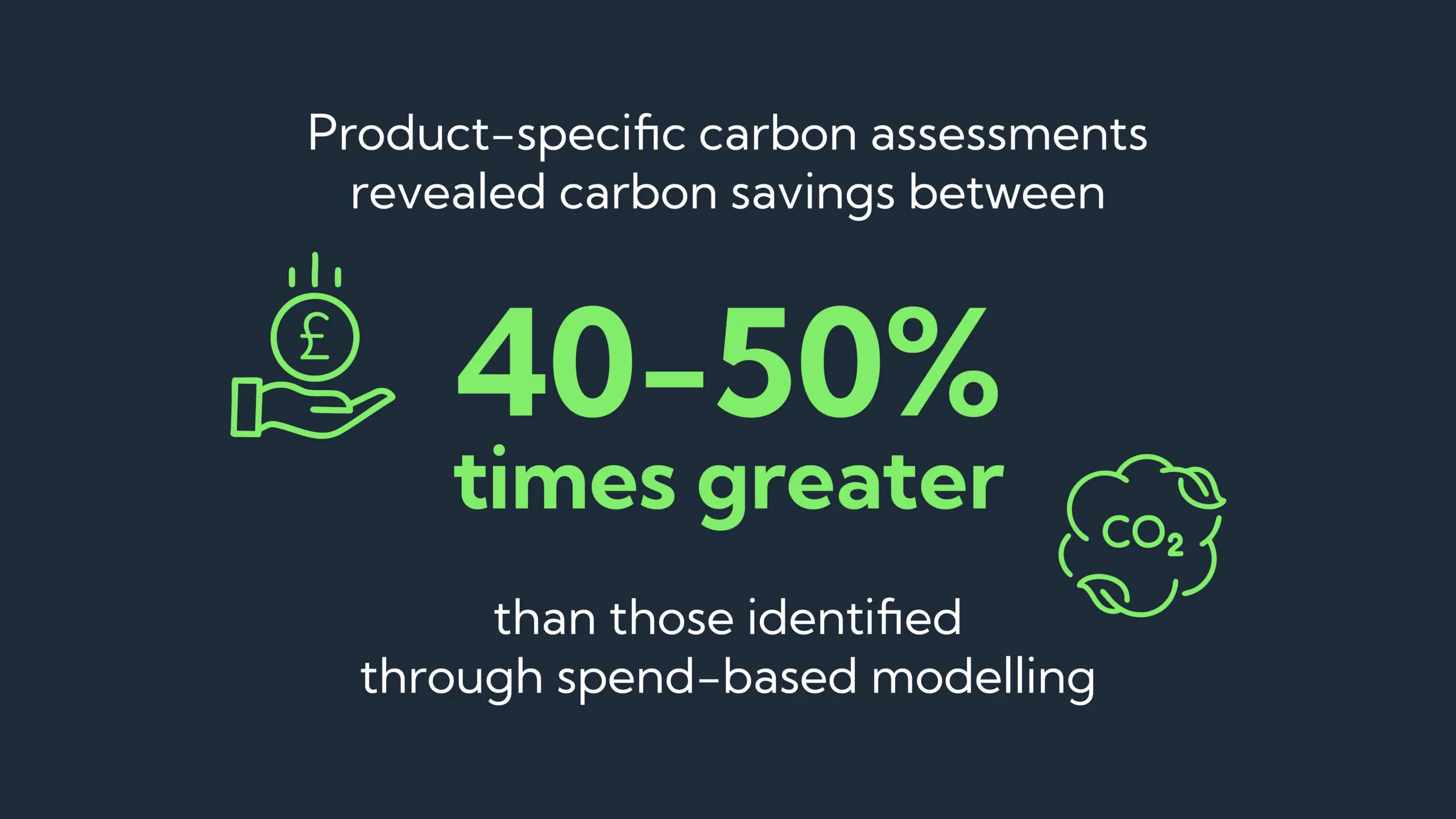
Analysis undertaken during the development of TXO’s Carbon Calculator found that product-specific carbon assessments revealed carbon savings between 40-50% times greater than those identified through spend-based modelling for comparable procurement decisions.
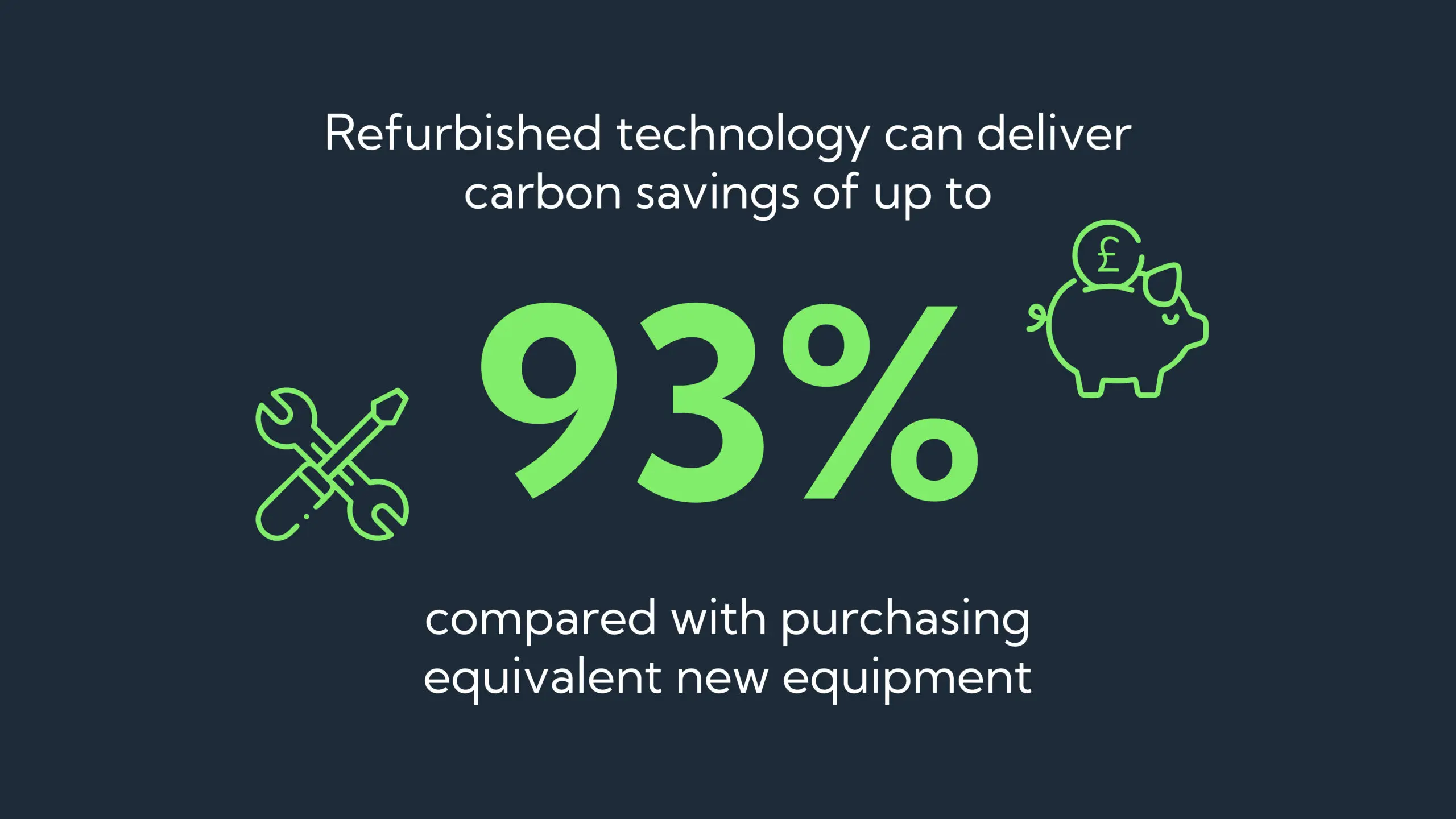
The scale of the opportunity becomes even clearer when you consider that, depending on the equipment category, refurbished technology can deliver carbon savings of up to 93% compared with purchasing equivalent new equipment.
“One of the biggest challenges in Scope 3 reporting is that the data doesn’t always reflect the true impact of procurement decisions. When organisations rely solely on spend-based estimates, they can significantly underestimate the carbon savings delivered through refurbishment and reuse. Better data gives organisations a clearer picture of where they’re making meaningful progress towards net zero and where further action will have the greatest impact.”
Natalia Ferenc, Group ESG Analyst at TXO
Why this matters for your net zero strategy
For organisations pursuing Science Based Targets, procurement is no longer judged solely on cost, quality and resilience. It is expected to demonstrate its contribution to reducing Scope 3 emissions. That requires more than estimated emissions. It requires data that reflects the real impact of procurement decisions.
When organisations can quantify the carbon savings achieved through refurbishment and reuse, they gain a clearer understanding of where emissions reductions are being delivered across the value chain. That insight supports more robust sustainability reporting, strengthens the business case for the adoption of circular practices and provides executive teams with greater visibility of how procurement is contributing to net zero objectives.
The value of circular procurement can only be fully realised when organisations can demonstrate its impact. The TXO Carbon Calculator was created to provide that visibility.
Delivering circularity with measurable results
Developed in collaboration with the Carbon Trust and integrated into TXO’s asset management platform, i-TRAC, the TXO Carbon Calculator is the industry’s first tool to quantify the carbon savings generated through the purchase of refurbished network equipment and the recovery of surplus technology assets at a product level.
By comparing the embodied carbon of new and refurbished equipment, including refurbishment activities and transport, it reveals the emissions avoided through reuse, with environmental savings displayed alongside financial results to provide a clear, transparent view of impact.
Underpinned by a robust lifecycle carbon assessment methodology, the calculator gives organisations confidence that reported carbon savings are transparent, evidence-based and aligned with recognised carbon accounting best practice.
To learn more about the methodology behind the calculator, read our article, TXO’s Carbon Calculator: How reuse creates measurable carbon savings in network infrastructure.
BT Group is one of the organisations using TXO’s Carbon Calculator as part of its Exchange Clearance Operation (ECO) programme to better understand the carbon savings achieved through refurbishment, reuse and asset recovery. As Matt Manning, Head of Sustainability at BT Group, explains:
“We can’t deliver our Climate Transition Plan in isolation and partnership, like that with TXO, is critical. Working with TXO enables us to maximise the value of network assets through refurbishment, reuse and responsible recovery, while giving us greater visibility of the carbon benefit of those activities generate. That insight is increasingly important as we continue to improve the accuracy and granularity of our reporting from our suppliers and progress towards our net zero ambitions”
Matt Manning, Head of Sustainability, BT Group plc
Better data. Better procurement. Faster progress towards net zero.
Organisations are under increasing pressure to demonstrate measurable progress towards their sustainability goals. While spend-based EEIO reporting remains an important foundation for estimating Scope 3 emissions, businesses looking to strengthen Science Based Targets and accelerate their route to net zero need greater visibility into the real impact of their procurement decisions.
By complementing recognised carbon accounting methodologies with product-specific carbon data, TXO enables organisations to demonstrate the environmental value of refurbishment, reuse and asset recovery, supporting more informed decision-making and more robust sustainability reporting.
When organisations can quantify the environmental value of circular procurement, they are better equipped to make informed decisions, demonstrate measurable progress and accelerate their journey towards net zero.